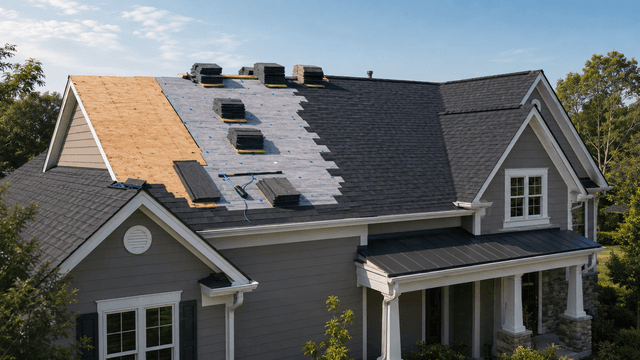
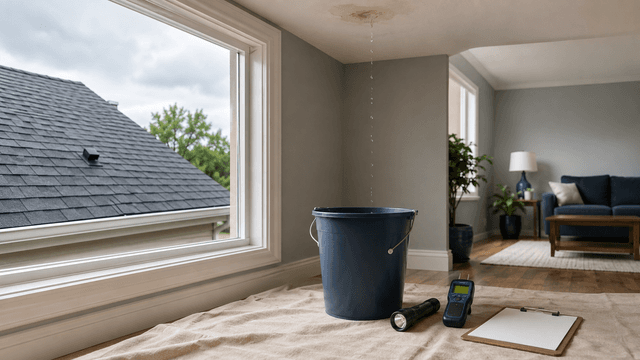
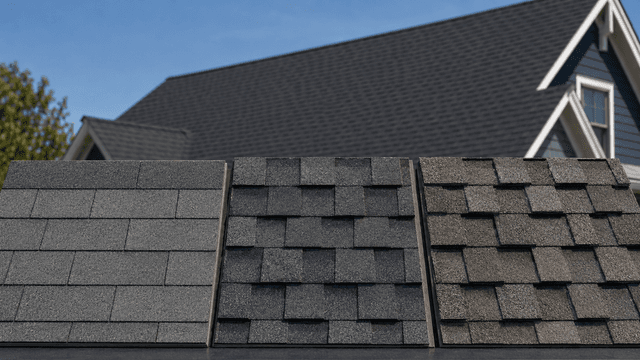
For an Imperial homeowner, the useful question is often whether the roof needs action now or can be planned for a later installation window. The answer starts with its present condition and a documented next step.
Separate the immediate concern from the larger decision
If water is entering the home, first keep people away from wet electrical fixtures, sagging ceilings and unstable material. Arrange qualified help for the active problem. A leak needs attention even while the long-term repair or replacement scope is being assessed.
For a roof without an active leak, collect the known history. When was it installed? Have several areas needed work, or has one detail caused repeated trouble? What changed after the latest weather event? Unknown answers are useful inspection questions, not reasons to guess.
Section takeaway: Address the active concern first. Use the roof’s history and assessment findings to make the larger repair-or-replacement decision.
Use a before-winter decision meeting
Instead of asking only whether the roof can last another winter, ask the roofer to explain the risk behind each option. A useful discussion produces one of three documented next steps:
The recommendation should follow the documented condition of the roof.
PATH A
Monitor
What remains serviceable, what should be watched and what would trigger another assessment?
Ask for: What to watch and when to reassess.
PATH B
Correct a defined issue
What work addresses the finding, and what condition remains elsewhere?
Ask for: The correction and its limits.
PATH C
Plan replacement
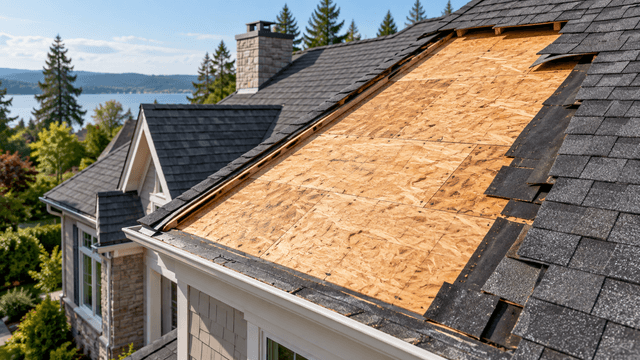
Why is a broader project warranted, and what needs to happen before installation?
Ask for: The scope and scheduling dependencies.
These are alternative outcomes, not stages every roof must pass through. A qualified assessment should explain which path fits the findings.
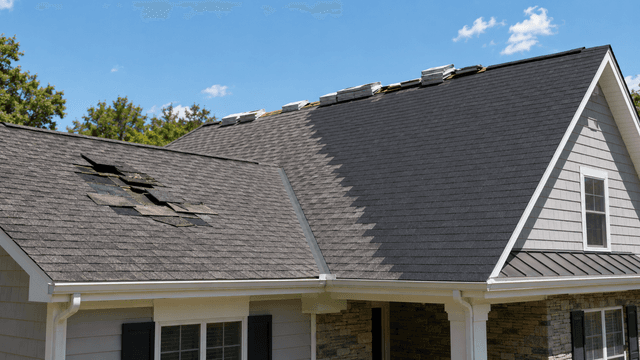
These are decision categories, not diagnoses you can assign from the ground. Ask for photographs and a written explanation linking the recommendation to the roof.
Section takeaway: Ask for a documented next step and the evidence behind it, rather than a replacement decision based on the season alone.
Keep learning: Explore the repair-versus-replacement guide for the wider condition framework.
Ask how the installation window will work
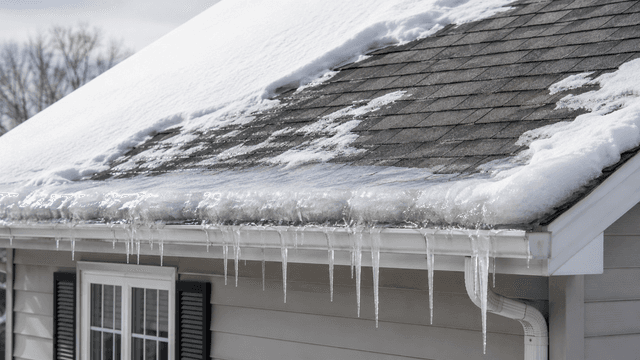
Western Pennsylvania winter planning includes the possibility of snow, ice and changing work conditions. A proposed date should come with a weather decision process and a plan for protecting the home during the job. Avoid choosing a contractor solely because one promises the earliest start.
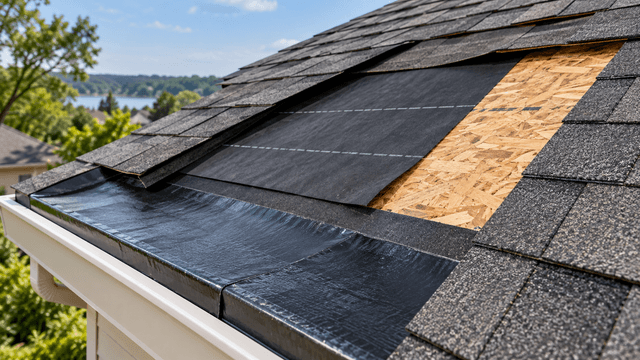
For asphalt-shingle work in cold conditions, ask how the crew will follow the selected product’s current installation and sealing instructions. IKO notes that cold-weather conditions can delay normal sealing and require additional measures under its instructions. A homeowner should ask for the method, not attempt to carry it out.
Section takeaway: A useful installation plan explains weather decisions, product requirements, property protection and schedule changes.
Keep learning: Review seasonal replacement planning for broader scheduling context.
Leave the assessment with a usable plan
Request the proposed scope, unresolved conditions, scheduling dependencies and contact for changes. If replacement can be planned rather than rushed, use that time to compare the same work and read the warranty terms. If immediate work is advised, ask what finding drives the urgency.
Use the existing repair-versus-replacement guide for the wider condition framework. Visit the Imperial roofing page to connect the next step to local service, and review seasonal replacement planning for broader scheduling context.
Section takeaway: Leave with a decision you can explain: what was found, what is recommended, what remains uncertain and what happens next.