Quick answer
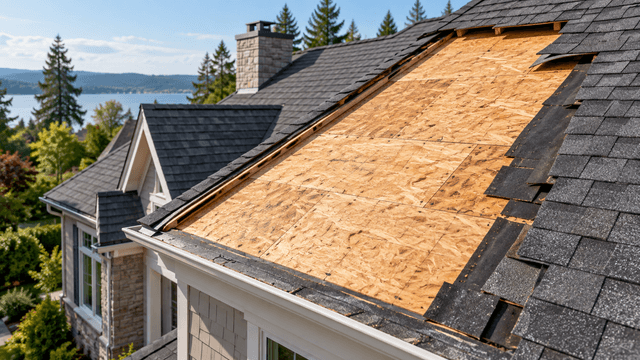
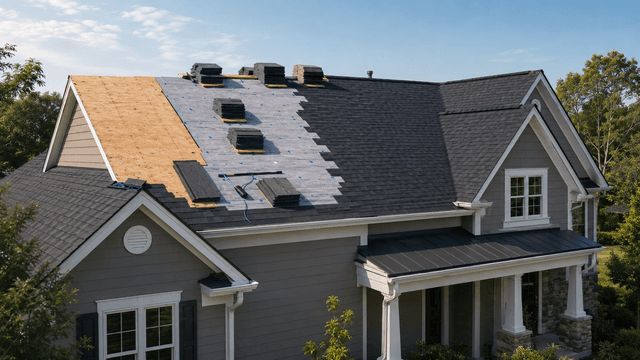
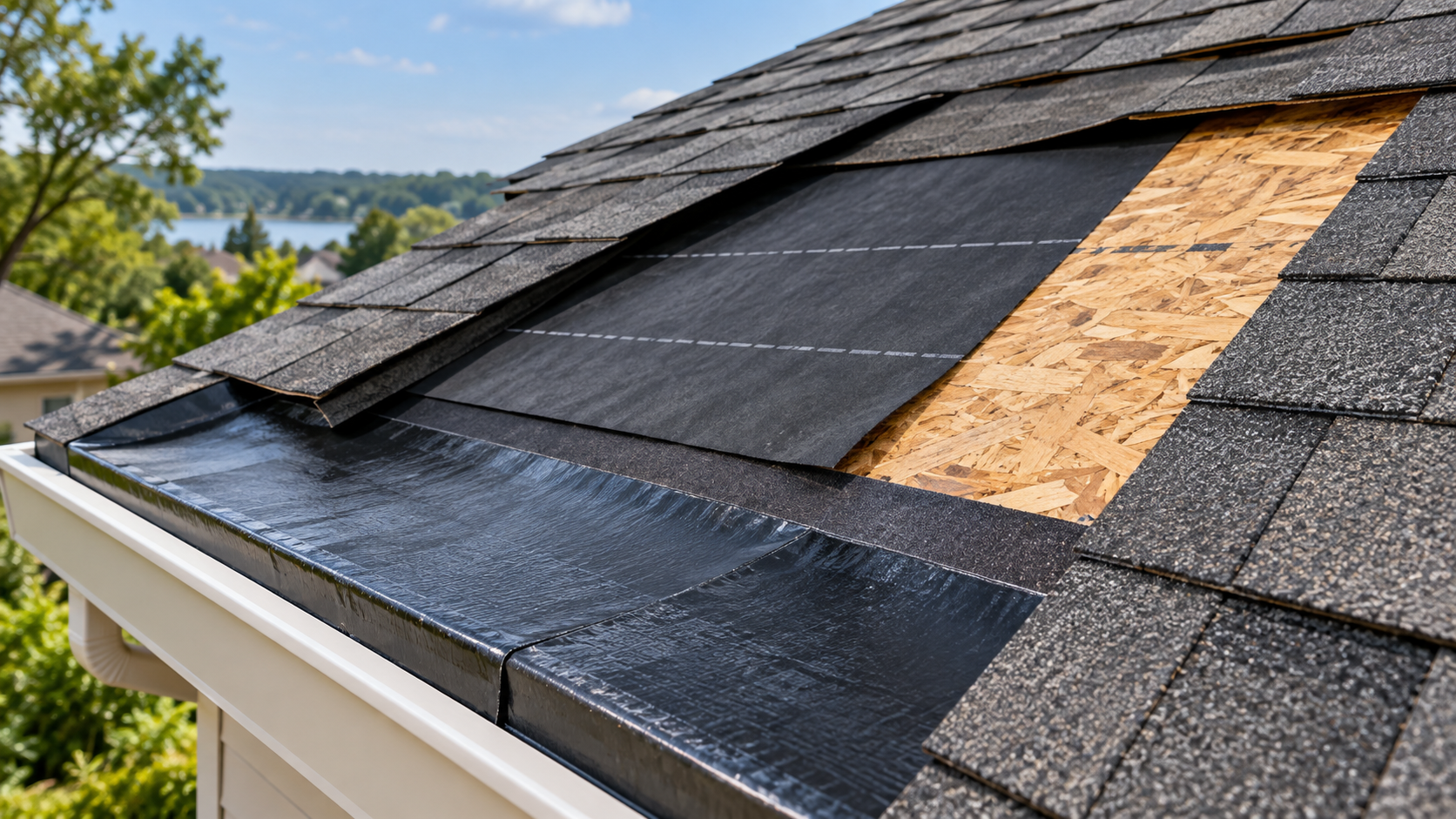
Roof underlayment is a water-shedding layer installed over the roof deck and beneath the shingles. It provides secondary protection while the shingles remain the primary roof covering. Common categories include asphalt-saturated felt, synthetic underlayment and self-adhering membranes used in vulnerable areas.
Underlayment is mostly hidden after installation, but it plays an important role in the complete roof system. It helps protect the deck during installation and provides a secondary path for water that reaches beneath the shingles.
What does roof underlayment do?
- Separates the roof covering from the wood deck
- Provides secondary water-shedding protection
- Helps protect the deck during construction, within product exposure limits
- Creates a consistent surface for installing the roof covering
- Works with flashing, edge components and membranes as part of the water-management system
Underlayment is not designed to replace properly installed shingles or flashing. Water must still be directed down and off the roof through correctly overlapped components.
Types of roof underlayment
| Type | General characteristics | What to verify |
|---|---|---|
| Asphalt-saturated felt | Traditional felt-based material available in different weights. | Product grade, fastening, overlaps and exposure limits. |
| Synthetic underlayment | Engineered sheet material that can offer lower weight, tear resistance and a textured walking surface. | Manufacturer, compatibility, fastening pattern and permitted exposure. |
| Self-adhering membrane | Adhesive-backed protection often specified at eaves, valleys and other vulnerable areas. | Required locations, substrate preparation, laps and temperature conditions. |
“Synthetic” is a broad category, not one universal product standard. Compare the named product, installation instructions, ratings and compatibility rather than relying on the category label alone.
Underlayment versus ice-and-water protection
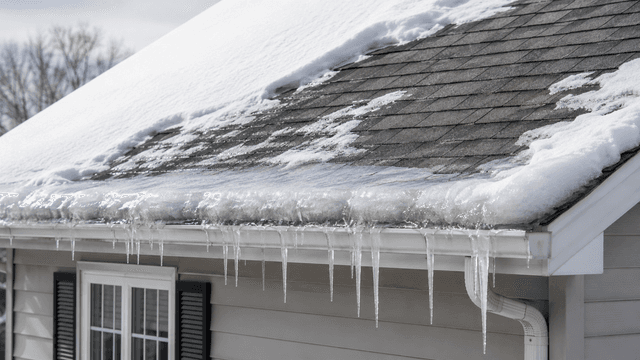
Standard underlayment covers broad roof areas. Self-adhering ice-and-water protection is typically used where added protection is required or specified, such as eaves, valleys and penetrations. The required locations depend on the roof design, climate, local code, product instructions and project specification.
The membrane does not prevent an ice dam from forming; it helps protect the roof assembly from water that can back up beneath the covering. Learn more about ice dams and roof-edge protection.
How underlayment works with flashing
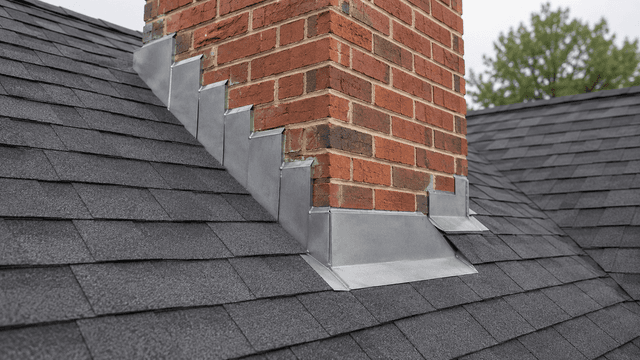
Roof components must overlap in a planned sequence so gravity carries water toward the eaves. Underlayment, drip edge, valley materials and roof flashing are integrated differently depending on the location. Caulk alone is not a substitute for a properly layered detail.
What can go wrong?
- Wrinkles, buckles or poorly secured material beneath the shingles
- Incorrect overlaps or reversed water-shedding laps
- Unsealed or improperly detailed penetrations
- Exposure beyond the product’s permitted timeframe
- Installation over a wet, deteriorated or unsuitable roof deck
- Incompatible products or failure to follow manufacturer instructions
Because the underlayment becomes concealed, installation documentation matters. Product labels, progress photographs and a detailed scope can help establish what was installed.
Questions to ask in a roofing estimate
- Which exact underlayment product is included?
- Where will self-adhering membrane be installed?
- How will valleys, eaves, walls and penetrations be detailed?
- Is the product compatible with the selected shingles and roof deck?
- What happens if the deck is wet or damaged after tear-off?
- How will installation be documented before the shingles cover it?
Use the roofing estimate checklist to compare the complete system rather than evaluating a shingle-only price.
The bottom line
Underlayment is secondary protection, but it is not a minor detail. The correct product, placement, overlaps, fastening and integration with flashing all matter. Ask the contractor to name the material and explain where each protective layer will be installed before the roof covering hides it.