Quick answer
Compare roofing estimates by the work included—not by the final price alone. Each proposal should identify the tear-off scope, roof-system materials, decking terms, flashing, ventilation, permits, property protection, cleanup, warranties, payment schedule and exclusions. If one quote is vague in an area another explains, ask both contractors to clarify it in writing before choosing.
A lower roofing estimate may represent a better value. It may also omit work that another contractor already included. You cannot tell from the total alone.
The useful question is not simply, “Which roof costs less?” It is, “What complete roofing system, installation responsibility and post-project support does each price buy?”

Scope
Does the price cover the same removal, preparation, installation and cleanup work?
Uncertainty
Which conditions could change the price, and how will those changes be approved?
Accountability
Who owns the workmanship, warranty claim and service relationship after installation?
The comparison rule
Do not fill in vague proposal language with assumptions. If “roof replacement” does not say whether permits, flashing, ventilation, disposal or damaged decking are included, treat those details as unknown until the contractor documents them.
Roofing estimate checklist at a glance
Use this table to make each contractor answer the same questions. A complete estimate may organize the information differently, but the project should not depend on verbal assumptions that never reach the agreement.
| Estimate category | What should be clear | Question to ask |
|---|---|---|
| Removal | Which existing layers and materials will be removed and disposed of | Could additional layers change this price? |
| Decking | Included allowance, unit price and approval process for replacement wood | How will hidden damage be documented before extra work begins? |
| Roof system | Exact shingles, underlayment, starter, ice-and-water protection and ridge components | Which manufacturer and product lines are included? |
| Flashing and penetrations | Treatment of chimneys, walls, valleys, vents, skylights and pipe penetrations | What will be replaced, reused or evaluated after tear-off? |
| Ventilation | Existing intake and exhaust conditions plus any proposed changes | How does this plan work as a complete ventilation system? |
| Site and administration | Permits, delivery, access, property protection, debris removal and final cleanup | Which responsibilities stay with the homeowner? |
| Warranty and service | Material and workmanship terms, exclusions, registration and claim contact | Who should I call if the cause of a future problem is unclear? |
| Price and payment | Total, deposit, milestones, financing terms, expiration and change-order rules | What can alter the signed amount? |
A contractor may not know the full condition of the roof deck until the existing materials come off. That uncertainty is normal. The estimate should still explain how the unknown will be priced, documented and authorized.
1. Start with the roof assessment—not the sales presentation
A detailed proposal should connect its recommendation to the home’s actual condition. Ask what the contractor inspected, what was observed and which findings changed the proposed scope.
Useful documentation may include roof measurements, photographs, visible wear, flashing and penetration conditions, signs of moisture, ventilation observations and areas that cannot be confirmed until tear-off. The contractor should also explain whether the problem supports a repair or full replacement.
Better question
“What did you find that supports this scope?”
The answer should connect observed conditions to specific work. If you are still deciding whether the roof needs localized work or full replacement, start with the roof repair-versus-replacement framework or schedule a professional roof inspection.
2. Compare the entire roof system—not just the shingle
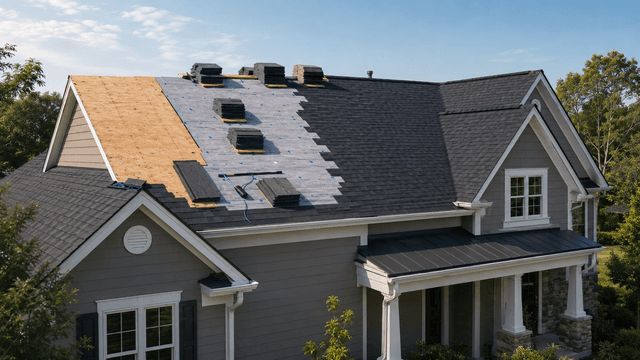
The shingle brand and product line matter, but shingles are only the visible layer. A roofing proposal should also address the deck, underlayment, ice-and-water protection, starter strip, flashing, penetrations, ventilation and ridge components that work together to shed water and manage the roof assembly.
Generic descriptions such as “architectural shingles,” “premium underlayment” or “new flashing as needed” make comparison difficult. Ask for exact products where they have been selected and a defined decision process where field conditions control the answer.
01
Shingles and accessories
Record the manufacturer, product line, color, starter, ridge cap and any performance classifications included in the proposal.
02
Water-management layers
Compare underlayment, ice-and-water protection, drip edge, valleys and transitions—not only the surface material.
03
Flashing details
Clarify how chimneys, sidewalls, skylights, vents and pipe penetrations will be handled and whether any components may be reused.
04
Ventilation plan
Ask how intake and exhaust work together and whether the proposal is correcting, preserving or changing the current setup.
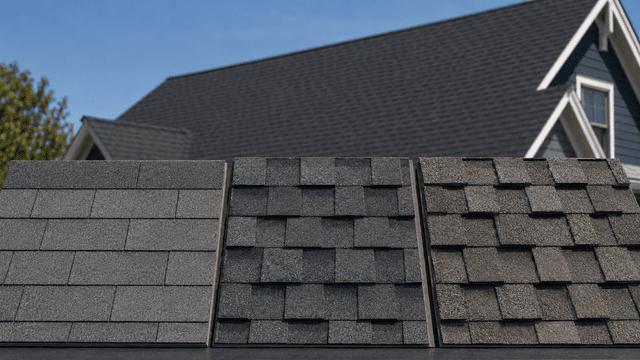
Trinity’s roof shingle selection guide explains the available IKO product options. Its roof replacement service also shows the system components included in a Trinity installation, giving you concrete categories to compare against another proposal.
3. Make hidden-condition pricing visible
Roofing estimates often contain allowances or unit prices because the contractor cannot see every layer before removal. The risk is not the existence of an allowance. The risk is discovering after the work starts that neither the price nor the approval process was clear.
Included amount
How much decking, flashing or related repair work is already covered by the base proposal?
Unit price
What rate applies if the project requires more than the included quantity?
Authorization
Who documents the condition, explains the change and approves added work before it proceeds?
Ask the same questions about multiple roof layers, deteriorated decking, chimney or skylight work, ventilation changes and any permit or code condition that could affect the scope. A clear change-order process protects both homeowner and contractor from avoidable disputes.
Compare a complete proposal
See what the roof needs before comparing the price
A Trinity Roofing Expert can inspect the roof, explain the recommended system and build an estimate around the home’s actual conditions and project goals.
4. Separate the three warranty questions
“The roof has a warranty” is not enough detail. The homeowner needs to know what is covered, who provides each layer of coverage and what happens when the cause of a problem is not obvious.
| Coverage question | What to compare | Responsibility to identify |
|---|---|---|
| Product or material coverage | Covered materials, duration, limitations, exclusions and whether coverage changes over time | Manufacturer, registration party and claim contact |
| Workmanship coverage | Installation defects, covered labor, duration, exclusions and transfer terms | Installing contractor or stated warranty provider |
| Service process | How a concern is reported, inspected and assigned when the cause is uncertain | Single service contact or separate contractor and manufacturer contacts |
Read the actual warranty documents rather than relying on a proposal headline. Look for maintenance obligations, exclusions, registration steps, transferability and whether future rooftop work could affect coverage. Review the Trinity TriShield Warranty to understand Trinity’s manufacturer, craftsmanship and service framework.
5. Verify the company and the project responsibility
A polished estimate does not replace basic verification. Confirm the contractor’s legal business name, physical or service contact information, applicable licensing or registration, insurance and who will perform and supervise the work. Requirements vary by state and location, so verify them through the appropriate state or local source.
Then ask how the contractor manages the project:
- Who pulls required permits and schedules inspections?
- Who is the homeowner’s day-to-day project contact?
- Who supervises the installation crew?
- How are landscaping, siding, windows, driveways and attic areas protected?
- How are debris, nails and material deliveries managed?
- Who handles a concern after final payment?
Experience matters most when it shows up as a repeatable process, clear documentation and accountable service—not simply a large number printed on a brochure.
6. Compare payment terms without losing sight of project value
The proposal should state the deposit, payment milestones, final-payment trigger, accepted payment methods, financing conditions and how long the price remains valid. If financing is involved, compare the loan terms separately from the roofing scope. A manageable monthly payment does not make an incomplete roof proposal complete.
Ask whether there are fees, prepayment conditions or other lender terms that affect total repayment. Trinity offers purchase and financing pathways, subject to lender approval and terms; explore its roofing payment options after deciding which roof scope you are financing.
Keep the decisions separate
First compare roofs. Then compare ways to pay for that roof.
Mixing the project and financing decisions can make a weaker scope appear more attractive because its monthly payment looks smaller. Establish what the home needs before evaluating how each option affects the household budget.
How to compare roofing quotes in four passes
You do not need to become a roofing expert. You need a process that makes differences visible.
01
Circle every unknown
Mark vague materials, allowances, exclusions, verbal promises and responsibilities that are not stated.
02
Normalize the scope
Ask each contractor to address the same system components, site work and potential hidden conditions.
03
Compare risk ownership
Identify who manages permits, changes, damage, cleanup, warranty registration and future service.
04
Judge value and clarity
Now compare total price, system quality, project confidence and support—not before the proposals describe comparable work.
A contractor does not need to be the cheapest to provide the best value, and a higher price does not prove a better roof. The strongest proposal is the one that pairs a sound recommendation with specific materials, a complete installation plan, controlled uncertainty and clear accountability.
Roofing estimate red flags worth clarifying
A red flag is a reason to slow down and ask for documentation. It is not proof by itself that a contractor is unqualified.
Vague scope
“Complete roof” appears without named materials, flashing, ventilation, removal or cleanup details.
Uncontrolled extras
The proposal can change for hidden conditions but gives no unit prices or approval process.
Verbal warranty
Coverage is described in conversation but no warranty terms are available to review.
Pressure before clarity
A deadline or discount is used to push a signature before open questions are answered.
Also pause if the business identity is unclear, requested credentials cannot be verified, the contract omits cancellation or dispute terms required in your area, or the payment structure is inconsistent with applicable state or local rules.
Choose the clearest accountable plan
A roofing estimate should reduce uncertainty before the project begins. It cannot reveal every hidden condition, but it can define the system being installed, the assumptions behind the price and the process for handling what the contractor discovers.
Once the scopes are comparable, choose the contractor whose recommendation, documentation and service model give you the strongest reason to trust the completed roof—not simply the most attractive number at the bottom of the page.
Build a home-specific comparison
Request a detailed roofing estimate
Meet with a Trinity Roofing Expert to review the roof’s condition, compare material options and understand the installation scope before deciding.
Continue learning