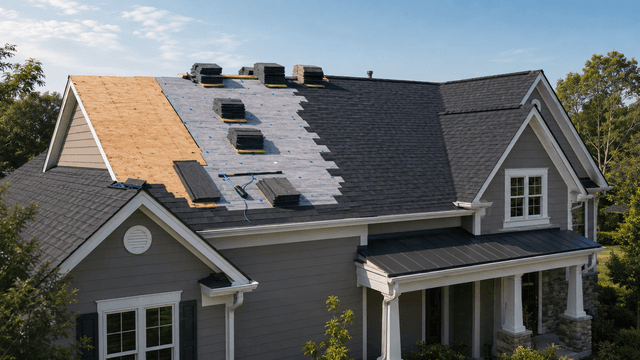
When a storm passes, the most useful first check is a safe record of what changed. For a Mount Laurel homeowner, that record can help distinguish a drainage concern, visible roof change and indoor symptom without attempting a rooftop inspection.
Wait for a safe opportunity to observe
Do not go outdoors to inspect while lightning, high winds or falling branches remain a threat. Once conditions are safe, stay on stable ground and clear of damaged trees, hanging materials and downed wires. You do not need to climb a ladder to start documenting a concern.
Section takeaway: Wait for a safe opportunity and leave roof access to professionals.
Make one outside pass from the ground
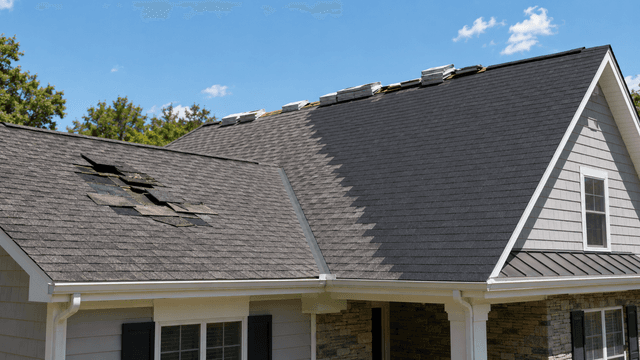
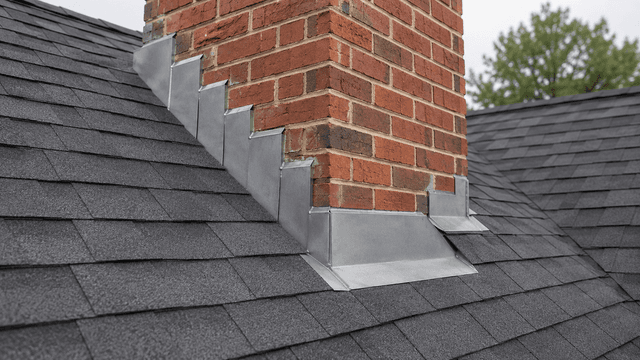
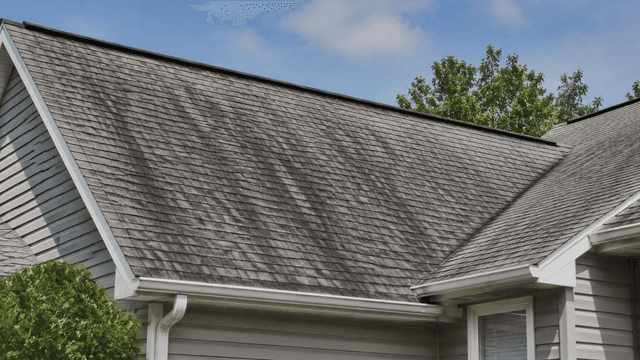
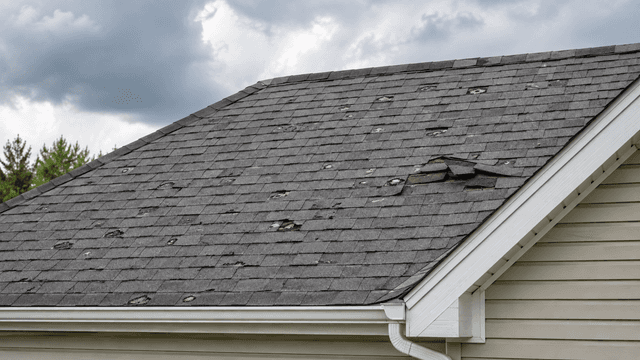
Look for changes you can describe accurately: roofing material on the ground, a visibly displaced edge, a loose gutter or debris resting on the roof. Photograph the wider view as well as the visible concern. Do not call an object a missing shingle or a failed flashing detail if you cannot identify it.
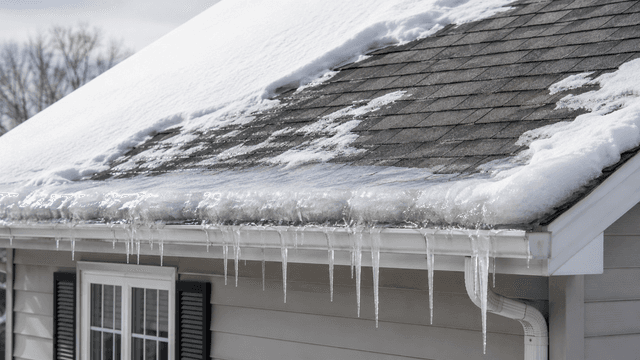
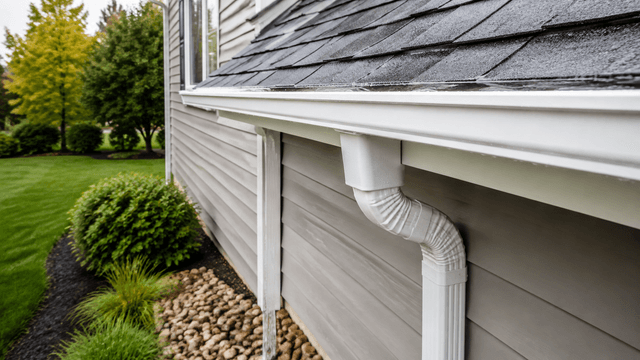
Notice where water is overflowing or collecting around the property if you can do so safely. A drainage observation is worth recording, but it does not prove the roof covering is the source of an indoor leak.
Section takeaway: Describe visible changes from the ground without naming an unverified cause.
Record the indoor timing
Write down when the stain or drip was first noticed and whether it changed during the rain. Is it a new mark or an older one that looks different? Where is it relative to the room, wall or visible roof feature? Keep those observations separate from a guess about the entry point.
Section takeaway: Keep the leak timing, weather and previous repair history together.
Prepare focused questions for the assessment
- What findings explain the reported symptom?
- Which roof details and drainage areas were inspected?
- Did access or conditions limit the assessment?
- Is any immediate protection needed?
- Why does the recommended scope fit the observed condition?
Read what a professional roof inspection should include before reviewing the findings. For an active leak, use the roof-leak response guide. When it is time to discuss replacement, visit the Mount Laurel roofing page for the commercial next step.
Section takeaway: Use the assessment to connect the evidence with a specific next action.