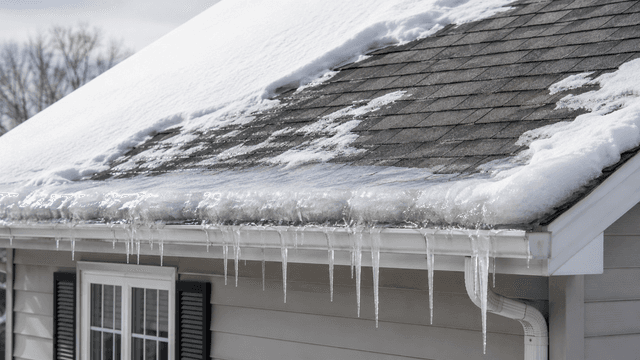
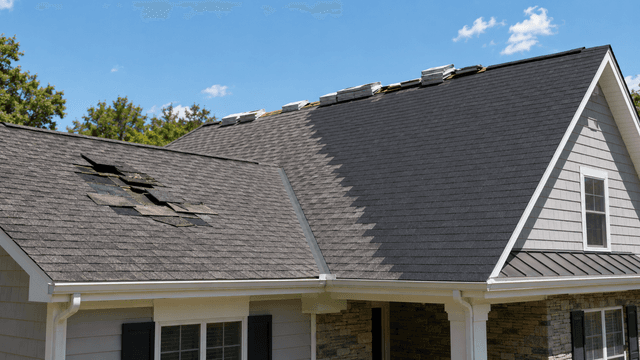
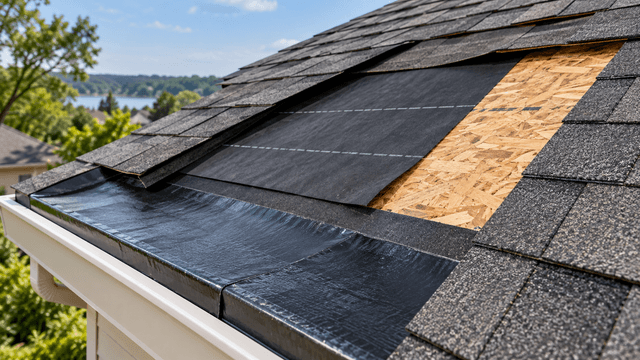
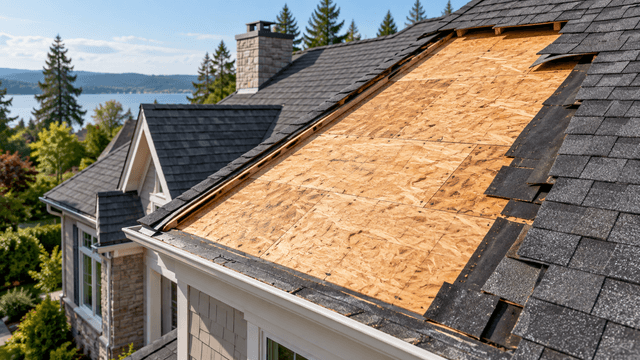
A wet ceiling after a Long Island storm raises two separate questions: where did water enter, and what work addresses that entry path? Keeping those questions separate helps a Ronkonkoma homeowner evaluate a repair recommendation without assuming either that the roof is sound or that the whole roof must be replaced.
Make a useful record after the weather passes
Note the time water appeared, the room involved and any changes visible safely from the ground. Record displaced material, debris or drainage overflow without going onto the roof. Keep earlier roof photographs and repair paperwork available for comparison.
Section takeaway: A clear before-and-after record helps focus the assessment.
Ask for a review of the whole water path
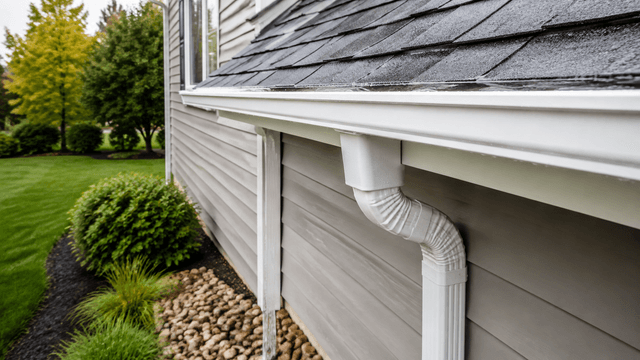
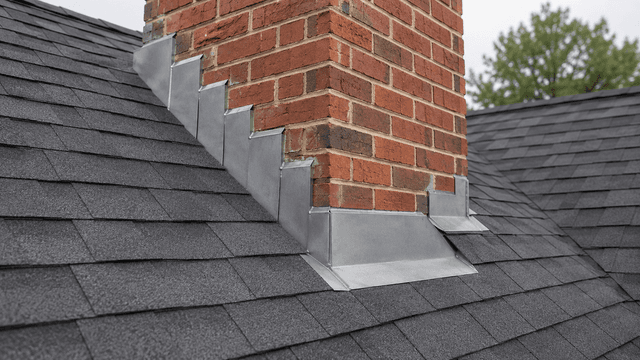
IBHS storm-preparation guidance includes roof coverings, flashing, valleys, skylights, soffits and roof edges. That range matters because a leak investigation limited to the middle of a shingle field may overlook a vulnerable transition.
Ask for photographs identifying the affected detail and a plain explanation of how water could reach the interior. If the suspected source is uncertain, have that uncertainty recorded. The location of an indoor stain does not automatically identify the failed exterior component.
Section takeaway: Ask for evidence connecting the observed symptom with a water path.
Separate urgent protection from the final scope
An active leak may require prompt professional attention while the full scope is being investigated. Ask what temporary work is proposed, how it will be documented and what follow-up is still needed. Keep people away from an area that appears unsafe.
Section takeaway: Identify the purpose of temporary work and the permanent follow-up.
Compare repair and replacement using condition
For a repair, ask how the surrounding materials and earlier repair history affect the proposal. Identify the exact area, the components to be replaced and the concerns outside the scope. A clear boundary makes it easier to understand what the repair is intended to resolve.
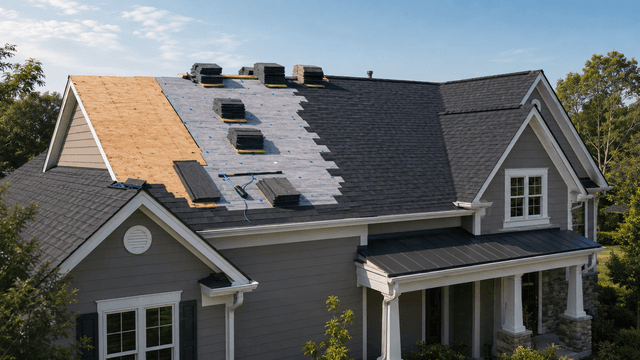
For replacement, ask which documented findings make a smaller repair less suitable. Review the different roof sections, concealed decking process and transitions to other materials. A weather event can prompt an assessment, but it is not a substitute for evidence supporting the scope.
Section takeaway: Use condition to evaluate repair and replacement alternatives.
Keep project records and responsibilities clear
Retain the assessment, dated photographs, written scope and any change approvals. If another party needs documentation, provide accurate observations and the contractor’s findings. Avoid treating an estimate as a promise about how a separate claim or review will be decided.
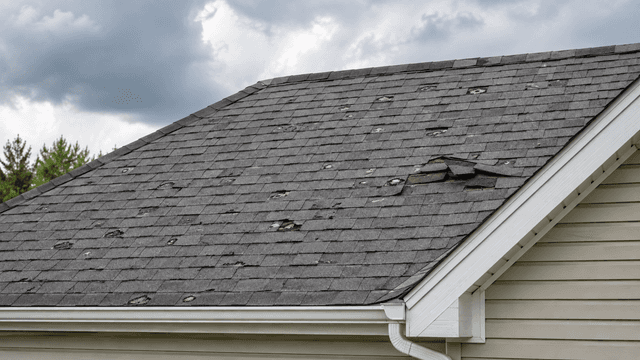
Continue with the roof damage from hail and high winds and the Ronkonkoma roofing service page. Bring the questions specific to the home to a roofing consultation.
Sources: IBHS homeowner storm preparation; National Weather Service: nor’easters.
Section takeaway: Keep findings, responsibilities and project changes documented.