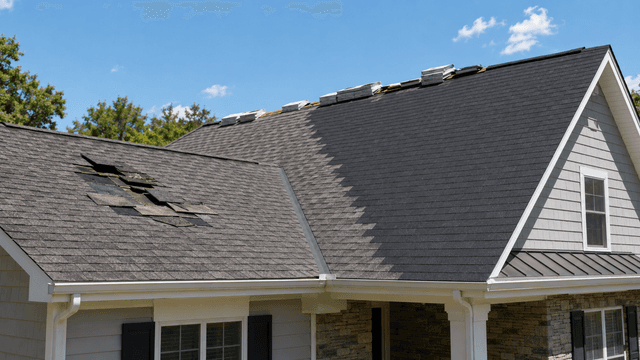
Hail can dent, crack or tear asphalt shingles and displace their protective granules. High winds can break shingle seals, lift edges, crease tabs or remove roofing materials completely. After a severe storm, document visible conditions from the ground, check safely accessible interior areas for water and arrange a professional inspection. Do not climb onto a wet, damaged or debris-covered roof.
A roof does not need to be missing an entire section to have storm damage. Hail impacts may leave small marks that are difficult to see from the ground, while high winds may weaken shingle seals without immediately removing the shingles.
Damage can also affect ridge caps, flashing, vents, gutters, fascia and roof penetrations. The appropriate response depends on what was damaged, how widespread it is and whether the affected materials can still shed water reliably.
Protect
Keep people and pets away from fallen materials, electrical hazards and unstable areas.
Document
Photograph visible conditions and record when the storm and any interior water appeared.
Inspect
Have the complete roof system evaluated instead of relying only on missing shingles.
Decide
Use the documented condition to determine whether repair or replacement is appropriate.
How hail can damage asphalt shingles
Hail damage depends on more than the reported diameter of the hailstones. Their hardness, speed, impact angle and concentration all matter. Roof slope, shingle product, installation, age and existing weathering also affect how the roof responds.
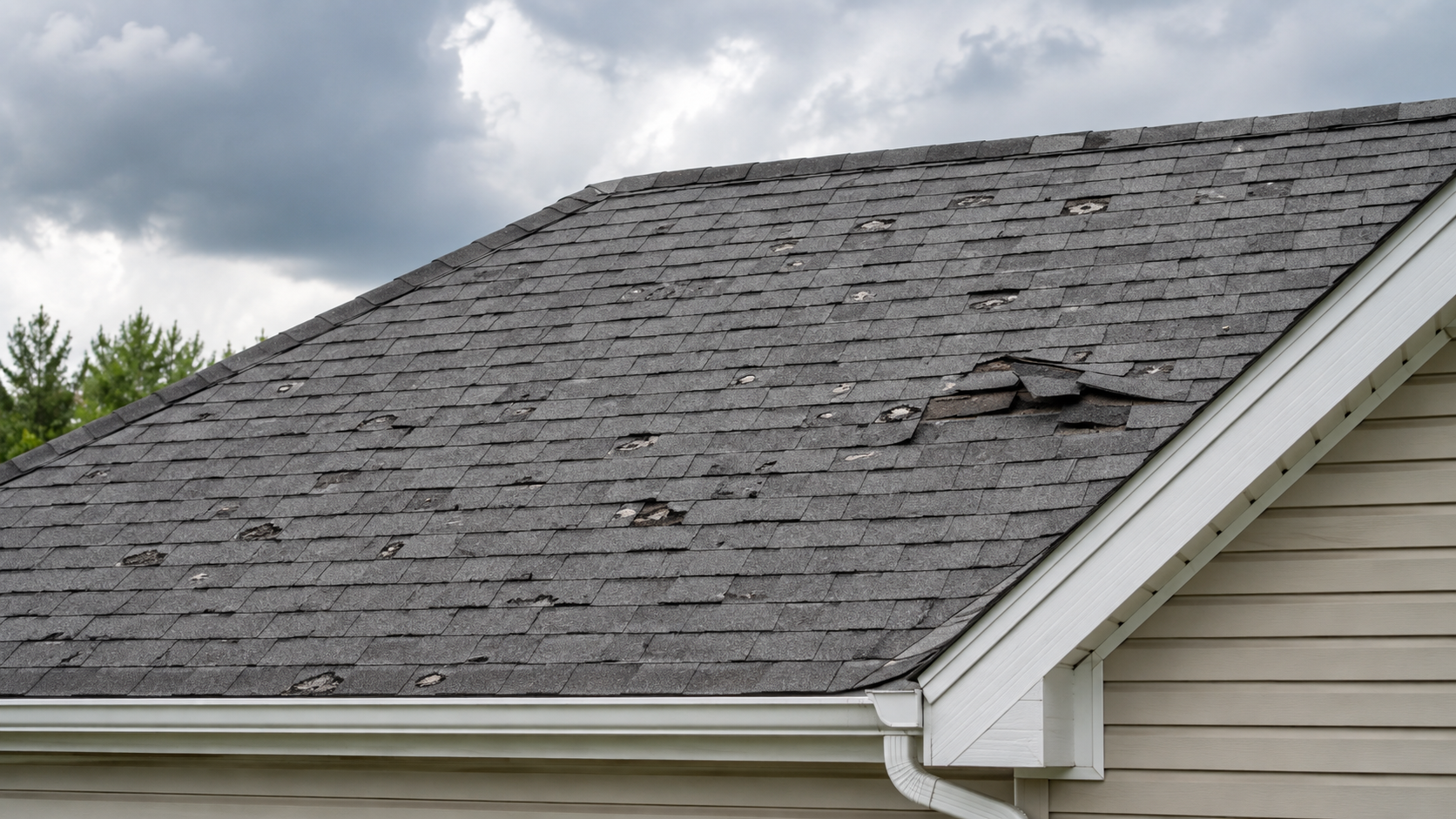
When hail strikes an asphalt shingle, it may:
- Create a dent or depression in the shingle
- Displace protective surface granules
- Bruise or fracture the material beneath the granules
- Crack, tear or rupture the shingle
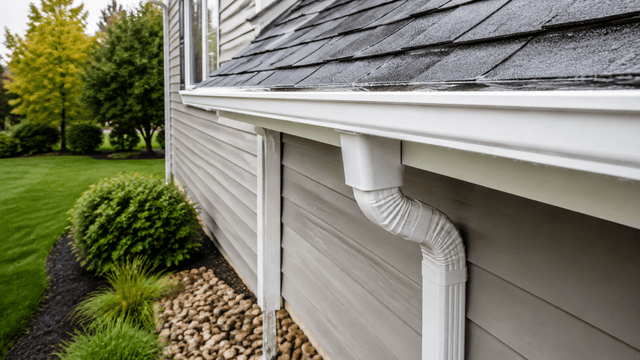
- Dent metal vents, flashing, gutters or downspouts
- Damage siding, screens or other exterior components near the roof
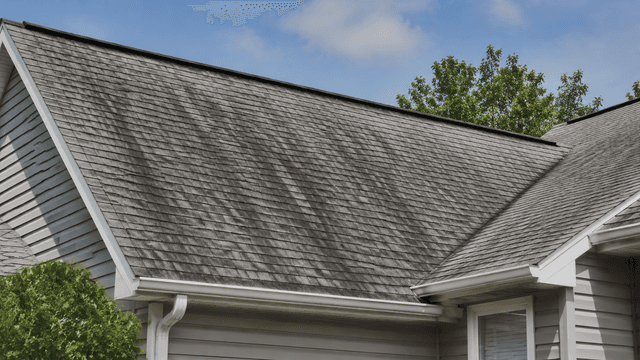
A recent hail impact may appear darker where granules have been displaced, but not every dark mark is hail damage. Natural weathering, algae, manufacturing variation, foot traffic and older mechanical damage can create similar-looking marks.
Dented gutters, damaged screens or hailstones collected on the property may help establish that hail occurred. They do not prove the condition or repairability of the shingles. The roof itself still needs to be evaluated.
How high winds can damage a roof
Wind moving across and around a house creates changing pressure on the roof. Edges, corners, ridges and roof transitions may experience especially strong forces. If wind gets beneath a loose or poorly sealed shingle, it can lift the material and increase the opening for the next gust.
Wind damage may include:
- Missing shingles or ridge-cap materials
- Lifted shingle edges or broken seals
- Creased, folded or torn shingle tabs
- Exposed underlayment or roof decking
- Loose flashing, vents or roof-edge components
- Branches or windblown debris striking the roof
- Gutters, fascia or soffit components pulling away from the home
A lifted shingle may settle back into place after the wind stops, making the problem difficult to see from the ground. A crease, failed seal or loosened fastener can still reduce the reliability of that section during later weather.
Signs of hail and wind damage
| Area | What you may notice | Why inspection matters |
|---|---|---|
| Shingle field | Impact marks, granule displacement, cracks, lifted edges or missing shingles | The visible mark may not reveal whether the shingle is bruised, torn or repairable. |
| Ridges and edges | Missing caps, lifted materials or exposed roof layers | These areas can experience different wind pressures than the center of the roof. |
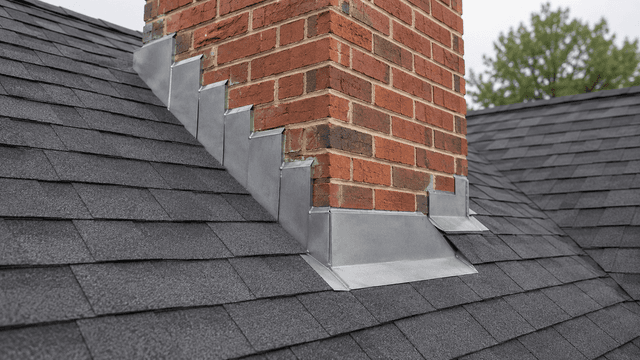
| Flashing and vents | Dents, movement, loose fasteners or separated sealant | A displaced transition may create a water-entry path even when nearby shingles look intact. |
| Gutters and fascia | Dents, loose sections, separation or impact marks | Drainage and roof-edge attachment may need to be reviewed together. |
| Attic and interior | Daylight, damp insulation, water stains, dripping or ceiling changes | Water may travel before becoming visible, so the interior mark may not sit below the opening. |
Stay away from downed power lines, fallen trees, unstable ceilings, standing water near electricity and loose materials that may fall. Do not climb onto a wet, steep or damaged roof. If there is an immediate electrical, fire, gas, structural or life-safety hazard, leave the affected area and contact emergency services or the appropriate qualified professional.
Can storm damage exist without an immediate roof leak?
Yes. Hail can weaken or fracture a shingle without opening an obvious hole. Wind can break a seal or crease a tab that settles back down after the storm. The roof may continue shedding water temporarily even though part of the system has become more vulnerable.
Waiting for an interior stain can allow another weather event to expand the problem. A post-storm inspection should document the roof condition rather than using the absence of a leak as proof that no damage occurred.
If water is already entering the home, follow the safety and documentation steps in what to do when a roof is leaking.
What should you do after a hail or windstorm?
Wait until conditions are safe
Do not go outside during active hail, dangerous winds or lightning. Check for utility, tree and structural hazards before approaching the home.
Check from the ground
Look for missing shingles, roof debris, damaged flashing, displaced gutters and visible changes to the roofline. Use binoculars or a camera zoom instead of climbing.
Check safely accessible interior areas
Look for water stains, damp insulation or daylight without entering an unstable, wet or electrically hazardous area.
Photograph the conditions
Capture wide views and close details from safe locations. Record the storm date, approximate time and when any interior symptoms appeared.
Arrange a professional roof inspection
Ask for written findings that identify the affected materials, location, extent, recommended scope and any areas that could not be accessed.
What should a storm-damage roof inspection include?
A useful inspection should examine more than the most obvious missing shingle. Depending on safe access and the home’s design, the assessment may include:
- Shingle fields on each roof plane
- Ridges, hips, valleys, rakes and eaves
- Flashing at chimneys, walls, dormers and penetrations
- Pipe boots, vents, skylights and exposed fasteners
- Gutters, downspouts, fascia and soffits
- Attic moisture indicators and visible decking conditions
- Collateral evidence on siding, screens and other exterior components
Trinity’s roof inspection service can document the roof condition and connect the findings to the recommended next step.
What should you document for insurance?
If you may report the event to an insurer, review your policy and its instructions directly. Coverage, exclusions, deductibles, required documentation and reporting deadlines depend on the policy and circumstances.
Useful records may include:
- The date and approximate time of the storm
- Photos or video taken from safe locations
- When leaks or interior symptoms first appeared
- The professional inspection findings
- Prior roof records, warranties and maintenance documents
- Receipts for reasonable emergency measures taken to limit additional damage
Preserve enough visual context to show what changed, but do not delay urgent safety action or enter a hazardous area to take photographs.
Does storm damage require roof repair or replacement?
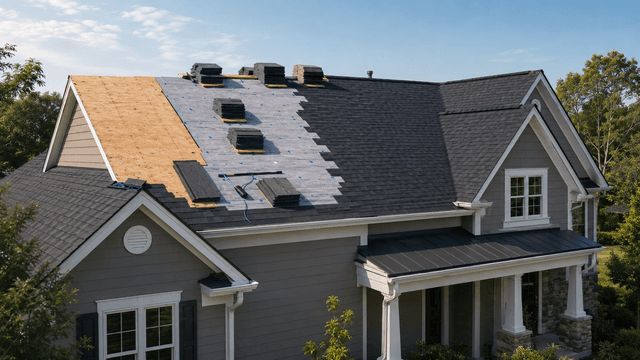
Hail or wind damage does not automatically require a complete roof replacement. The decision should reflect the affected area, shingle condition, roof age, remaining serviceability and whether a repair can be integrated reliably.
Repair may be appropriate when:
- Damage is limited to a defined area
- Compatible replacement materials are available
- Surrounding shingles remain serviceable
- The repair can restore reliable water shedding
Replacement may deserve consideration when:
- Impact or wind damage is widespread
- Multiple roof planes or system components are affected
- The roof was already deteriorated or near the end of its life
- A limited repair would not restore reliable performance
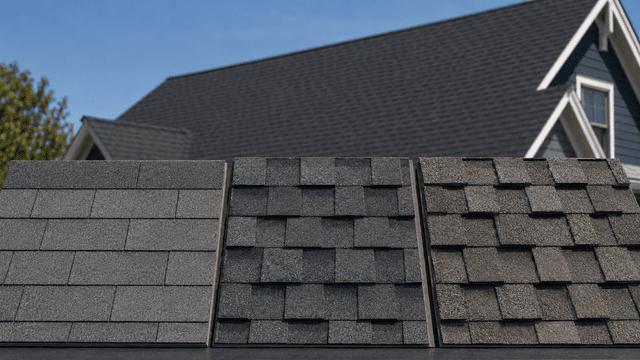
When replacement is appropriate, compare the complete roof system—not only the headline wind or impact rating. Product ratings describe standardized testing conditions and do not guarantee that a roof will avoid damage in every real-world storm.
Review Trinity’s roof shingle selection guide to compare available shingle construction and performance features.
Understand the next roofing decision
What a professional roof inspection includes