Quick answer
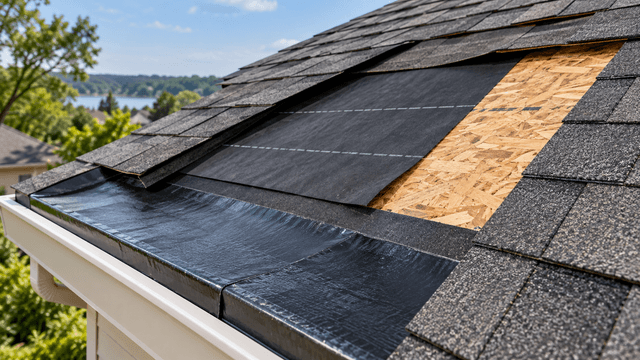
Roof decking—also called roof sheathing—is the structural surface attached to the roof framing beneath the underlayment and shingles. It must be dry, sound and suitable for fastening. Replacement may be needed when sections are rotten, delaminated, soft, damaged, improperly spaced or unable to hold the new roof system securely.
Shingles are the visible layer, but they depend on the deck below them. The deck creates the continuous base that supports underlayment, flashing and roofing materials while transferring loads to the rafters or trusses.
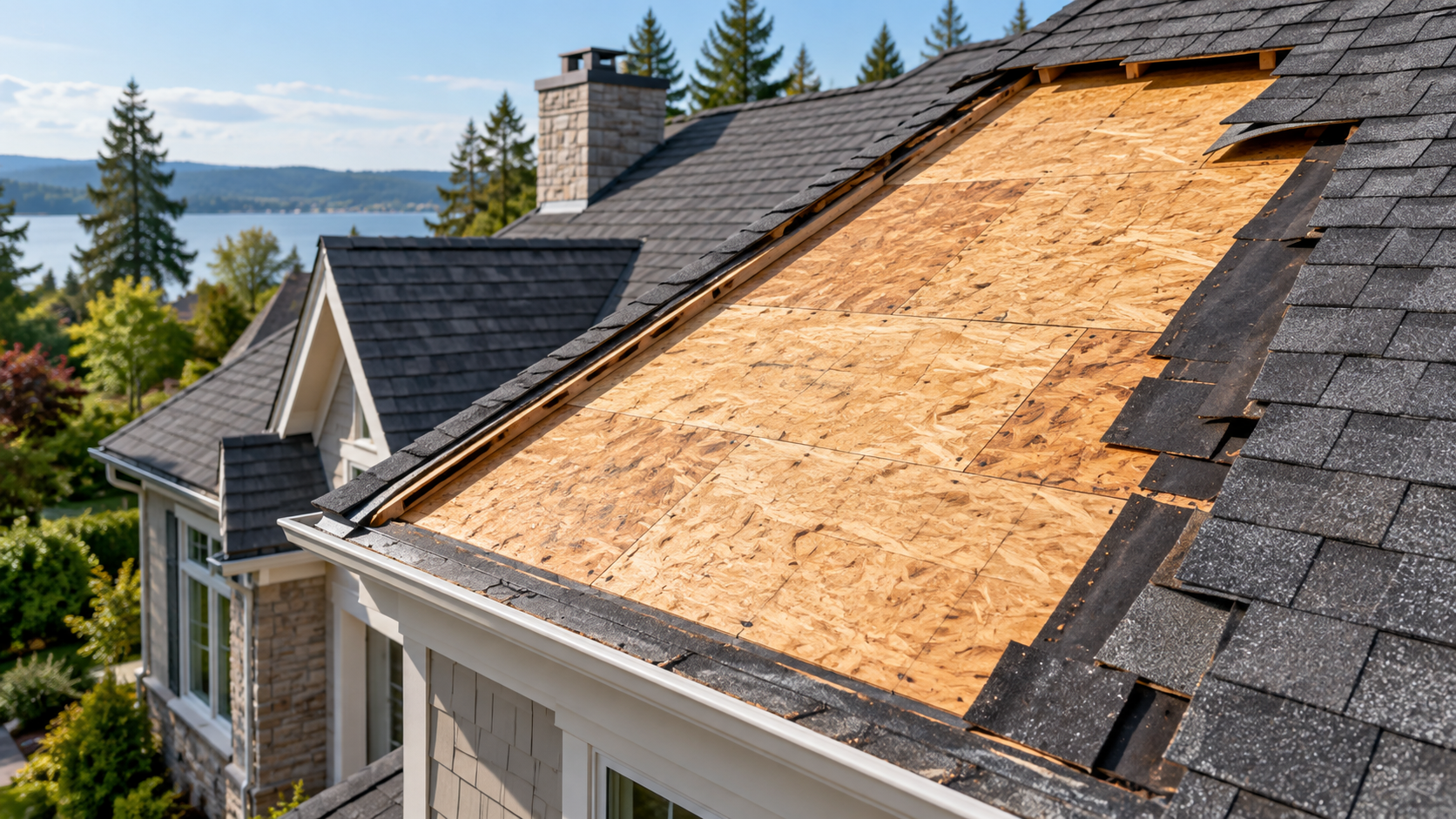
What is roof decking made from?
Modern residential roof decks commonly use plywood or oriented strand board (OSB). Older homes may have plank or board decking. The correct material and thickness depend on the framing, spacing, roof system, local code and manufacturer instructions.
| Deck type | What it is | What a roofer evaluates |
|---|---|---|
| Plywood | Cross-laminated wood veneer panels. | Thickness, span, moisture damage, delamination and fastener holding. |
| OSB | Engineered panels made from oriented wood strands. | Swelling, edge condition, moisture exposure and structural suitability. |
| Plank decking | Individual boards installed across framing. | Board condition, gaps, movement and compatibility with the new system. |
How decking becomes damaged
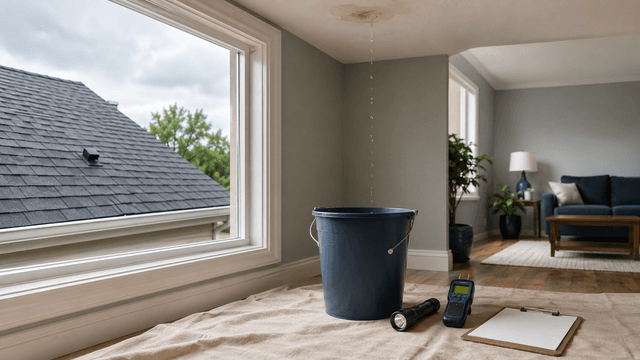
- Long-term water entry through failed shingles, flashing or penetrations
- Condensation and moisture accumulation related to attic conditions
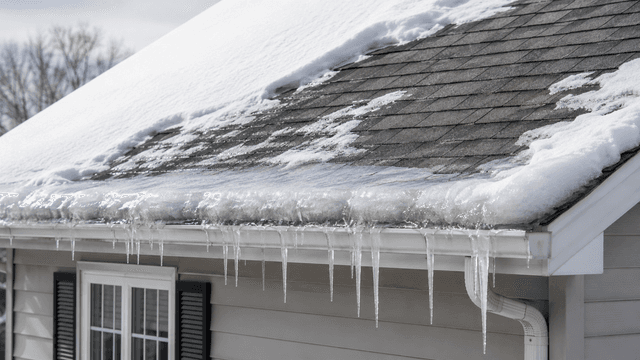
- Ice-dam leakage at roof edges
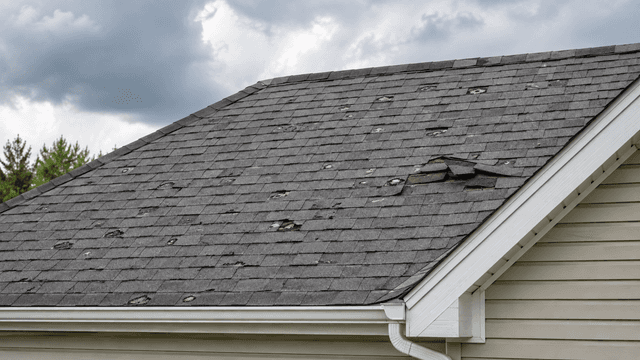
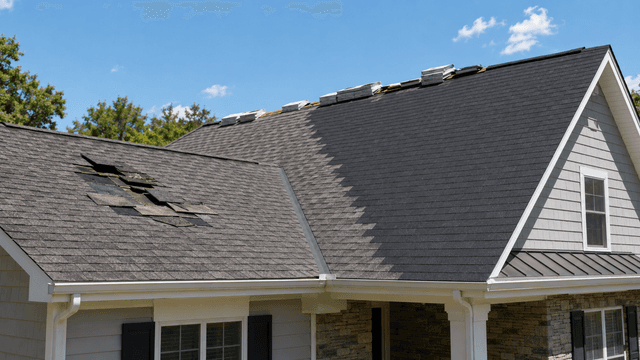
- Storm impact or fallen objects
- Repeated leaks that were patched without correcting the source
- Improper spacing, fastening or material selection during earlier work
Dark staining alone does not prove the deck must be replaced. The relevant questions are whether the material is structurally sound, dry enough for installation, compatible with the specified roof system and capable of holding fasteners.
Signs the roof deck may need attention
Some conditions may be visible before replacement, while others remain concealed until tear-off:
- Sagging or uneven roof areas
- Soft spots reported during a professional inspection
- Persistent attic moisture, staining or visible deterioration
- Daylight through openings in the deck
- Loose fasteners or widespread difficulty securing roofing materials
- Delaminated plywood, swollen OSB or split and deteriorated boards
Do not walk on a suspected weak area. A professional roof inspection can evaluate accessible attic conditions and exterior warning signs safely.
Why the full condition is often unknown before tear-off
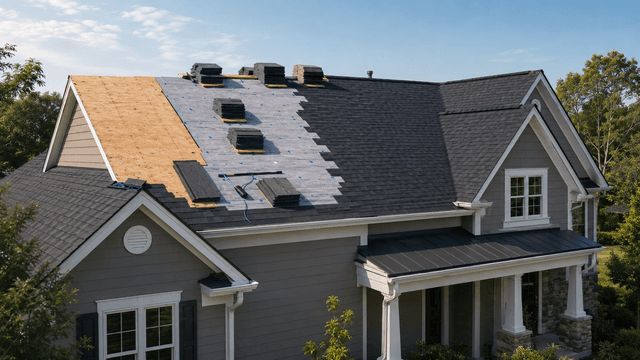
Underlayment and roofing materials cover most of the deck. An inspection can identify clues, but removal exposes the complete fastening surface. That is why a responsible estimate explains decking terms before work begins.
Budget checkpoint: Ask how much decking, if any, is included; what unit price applies beyond that amount; how damage will be photographed; and who must authorize additional replacement.
The roof replacement cost guide explains how concealed conditions can change a quote, while the replacement timeline shows when the deck is exposed and reviewed.
Partial versus full redecking
Localized deterioration may allow individual panels or sections to be replaced. Widespread damage, unsuitable materials, excessive gaps or a deck that does not meet the new system’s requirements may call for more extensive work. The choice should follow documented conditions, project specifications, manufacturer instructions and applicable code—not a blanket rule.
How decking fits into the complete roof system
- Framing supports the roof structure.
- Decking creates the structural fastening surface.
- Underlayment and water protection provide secondary water-shedding layers.
- Flashing protects transitions and penetrations.
- Shingles and ridge materials form the primary weather-facing layer.
- Ventilation helps manage attic heat and moisture.
Replacing shingles without correcting unsound decking can compromise fastening and the performance of the finished roof. Deck repairs also do not solve the original moisture source by themselves; flashing, ventilation or leak conditions may need correction at the same time.
The bottom line
Roof decking is the foundation of the roofing system. Its age alone does not decide replacement. The material must be sound, dry, properly supported and suitable for fastening. Ask the contractor to document concealed damage, explain the pricing method and connect every proposed deck repair to the condition found during tear-off.