Quick answer
Homeowners insurance may help pay for roof repair or replacement when a covered event causes damage. Coverage usually depends on the policy, cause of loss, roof condition, deductible and settlement terms. Normal aging, wear, neglected maintenance and excluded hazards generally are not treated the same as sudden covered damage. The insurer—not the roofer—decides coverage.
A damaged roof creates two separate questions: what work the roof needs and what the insurance policy may pay. A roofing inspection can document physical conditions and provide a scope of work. Only the insurance carrier can interpret the policy, investigate the claim, and issue a coverage decision.
When might homeowners insurance cover a roof?
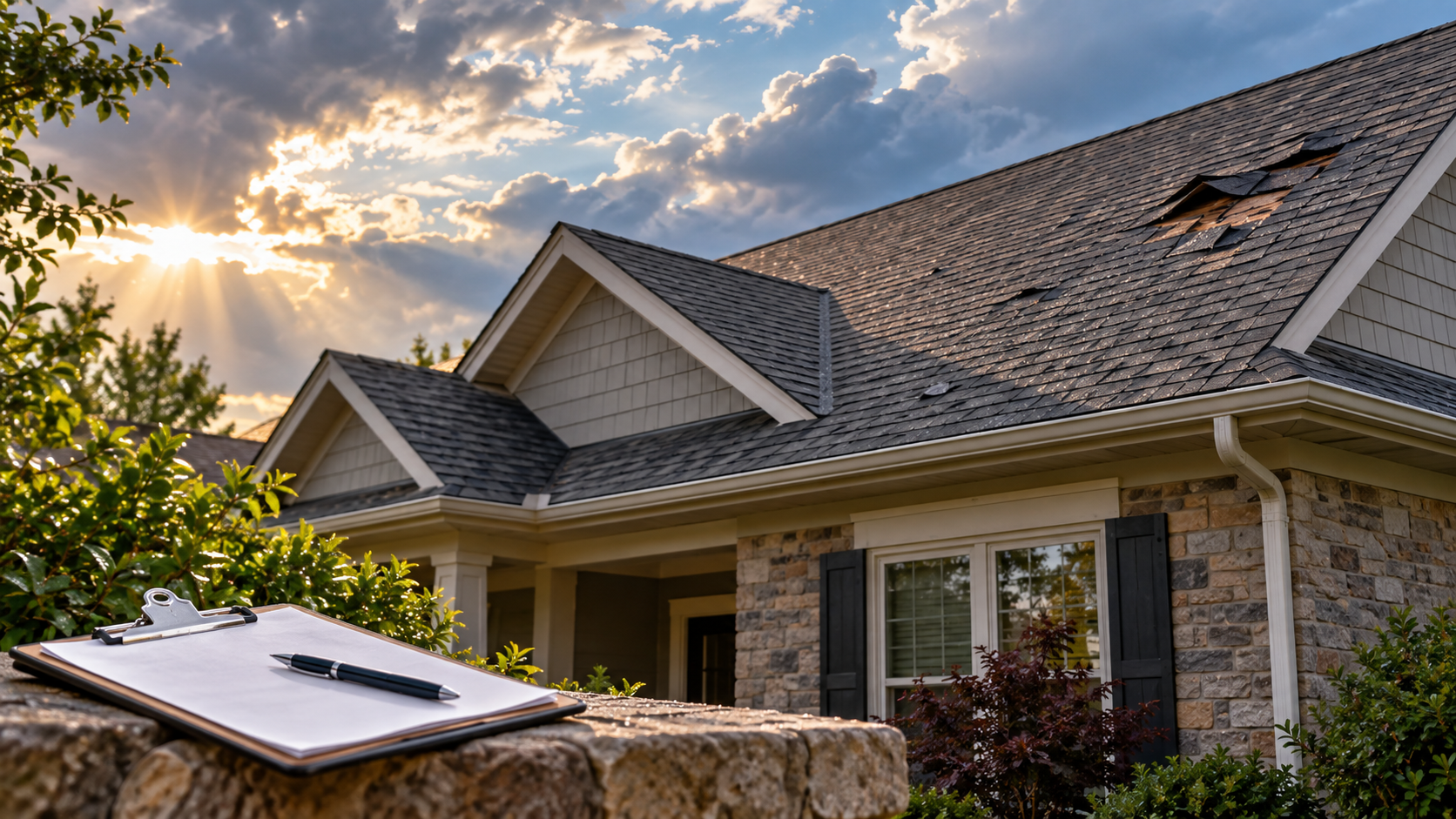
Many policies cover certain sudden and accidental losses, but covered events and exclusions vary. Wind, hail, falling objects, fire and other events may be addressed differently by each contract. Read the declarations, coverage forms, endorsements and exclusions rather than assuming every storm-related problem is covered.
Coverage also does not automatically mean the insurer will pay for an entirely new roof. The decision may depend on whether damage is localized or widespread, whether materials can be repaired, applicable building requirements and the settlement method in the policy.
Common reasons a roof claim may be limited or denied
- Normal wear, deterioration or an aging roof without a covered event
- Long-term leakage, rot or damage linked to deferred maintenance
- A cause of loss excluded by the policy
- Damage below the deductible
- Cosmetic damage that does not meet the policy’s coverage terms
- Insufficient documentation connecting the condition to the reported event
A denial does not prove that the roof is undamaged; it means the insurer determined that the requested payment was not covered under its interpretation of the policy. Ask for the decision and cited policy language in writing.
Replacement cost versus actual cash value
The Consumer Financial Protection Bureau explains that an insurance settlement may use replacement cost or actual cash value, depending on the policy. Replacement-cost coverage is generally tied to the cost of repairing or replacing damaged property with comparable materials. Actual cash value accounts for age and condition, so it can be lower than today’s replacement cost.
| Term | What it affects | Question to ask |
|---|---|---|
| Deductible | The amount the homeowner is responsible for under the policy. | Which deductible applies to this event? |
| Actual cash value | May reduce payment based on age and condition. | How was depreciation calculated? |
| Replacement cost | May reimburse covered replacement costs subject to policy terms. | Is any amount withheld until work is completed? |
| Mortgage servicer | May be included on the payment and release funds as work progresses. | What documents and inspections are required to release funds? |
What to do after suspected roof damage
- Protect people first. Stay off wet or damaged roofing and avoid fallen electrical lines or unstable areas.
- Limit additional damage safely. Use temporary interior protection when possible and save receipts for emergency work.
- Document conditions. Photograph visible exterior and interior damage from safe locations and note the event date.
- Review the policy. Check deductibles, reporting duties, exclusions and time limits.
- Contact the insurer. Follow its claim instructions and record claim numbers and conversations.
- Arrange a professional inspection. Ask the roofer to document roof-system conditions without promising insurance coverage.
For storm-specific warning signs, review Trinity’s guide to hail and wind roof damage. If water is entering the home, follow the immediate steps in what to do when a roof is leaking.
The roofer and adjuster have different roles
A roofer evaluates the roof, recommends repair or replacement and prices the construction scope. An insurance adjuster evaluates the reported loss for the carrier. Keep those roles separate. The roofer can provide measurements, photographs and a written proposal, but should not guarantee claim approval or interpret policy language as if representing the insurer.
Compare the insurer’s scope with the contractor’s estimate line by line. Differences may involve measured area, material specifications, flashing, ventilation, decking, permits or code-related work. Ask each party to explain differences in writing.
Questions to ask before signing
- What damage was observed, and what evidence connects it to the event?
- Is the proposed work a repair or full replacement, and why?
- What does the policy say about depreciation, deductibles and matching?
- Who approves changes discovered after tear-off?
- Will the mortgage servicer control any settlement funds?
- What amount remains the homeowner’s responsibility?
- Are financing terms separate from the insurance claim?
The bottom line
Insurance coverage is policy-specific. Document the roof condition, report the loss promptly, compare the construction and insurance scopes, and rely on the carrier’s written decision for coverage. A professional roof assessment can clarify what the home needs even when the claim outcome is still pending.